West Hampstead floral recycling and composting guide 2026
Posted on 11/10/2026
If you have ever looked at a fading bouquet and thought, "Can this be used for something better than the bin?", you are in the right place. This West Hampstead floral recycling and composting guide 2026 walks through the practical side of dealing with flower waste in a way that feels sensible, local, and actually doable at home or in a small business. Fresh flowers are lovely, but they do not stay fresh forever. Stems wilt, wrapping builds up, and before long you are left with petals, leaves, ribbon, and a bit of a mess. The good news? A lot of it can be reused, composted, or separated properly with very little fuss.
This guide is written for people who want a cleaner routine, better waste habits, and fewer "what on earth do I do with this?" moments. You will find the basics, a step-by-step process, common mistakes, and a practical checklist you can use straight away. A few smart habits go a long way here, truth be told.
Table of Contents
- Why West Hampstead floral recycling and composting guide 2026 Matters
- How West Hampstead floral recycling and composting guide 2026 Works
- Key Benefits and Practical Advantages
- Who This Is For and When It Makes Sense
- Step-by-Step Guidance
- Expert Tips for Better Results
- Common Mistakes to Avoid
- Tools, Resources and Recommendations
- Law, Compliance, Standards, or Best Practice
- Options, Methods, or Comparison Table
- Case Study or Real-World Example
- Practical Checklist
- Conclusion
- Frequently Asked Questions
Why West Hampstead floral recycling and composting guide 2026 Matters
Flowers create joy, but once a display reaches the end of its life, the waste stream can become surprisingly complicated. There are stems, bloom heads, elastic bands, cellophane, paper wraps, ribbon, dried foliage, delivery packaging, and sometimes water tubes. If all of that goes into one bin, you lose a lot of useful material and make disposal more expensive and less sustainable. For homes, offices, event organisers, and local florists, a better system means less waste and more value from each arrangement.
West Hampstead is a busy part of London, with a mix of flats, shops, cafes, and event spaces. That matters because different settings generate floral waste in different ways. A kitchen table bouquet from a local delivery needs a different routine from wedding centrepieces, sympathy tributes, or weekly corporate displays. The point is not to overcomplicate it. The point is to make the right next step obvious.
There is also the broader environmental angle. Organic flower waste can often be composted if it is clean and free from non-compostable materials. Even where full composting is not possible, separating recyclables from general waste reduces contamination. And if you have ever tried to rescue a bag of mixed rubbish with soggy stems and plastic wrap in it, you will know how quickly that becomes unpleasant. A small bit of sorting saves a lot of trouble later.
Expert summary: the best floral recycling routine is simple: separate organic material, remove contaminants, reuse what can be reused, compost what can be composted, and recycle clean packaging where accepted. Keep the system easy enough that you will actually stick to it.
How West Hampstead floral recycling and composting guide 2026 Works
At its core, floral recycling and composting is about sorting flower-related materials into the right waste streams. That sounds dry, but it is really just a tidy routine. Fresh flower heads, leaves, stems, and some paper-based wraps can often go into compost, while plastic sleeves, ribbons, foam, tape, and wires usually need separate handling. The exact answer depends on the material, not just the item type. A paper wrap might be compostable; a plastic-coated wrap usually is not. Annoying? A bit. Manageable? Absolutely.
The process usually works in four stages:
- Sort the bouquet or arrangement into organic and non-organic parts.
- Check for contamination such as glitter, plastic coatings, flower foam, or non-compostable ties.
- Choose the correct outlet: home compost, council food/garden waste where available, green waste collection, or general recycling for clean paper and cardboard.
- Reuse anything still useful, such as glass vases, ribbons, gift boxes, or sturdy wrapping paper.
For businesses, the process needs a bit more structure. A florist may separate offcuts during preparation, store green waste in a clean container, and keep packaging in another. Event teams often need a post-event sweep where floral debris is collected before it gets mixed with table waste, drinks cups, and broken decorations. You do not need a massive setup. You do need consistency, though. That is the bit people skip, then wonder why the system fails.
One practical detail people miss: flowers that are heavily treated, dyed, glittered, or arranged with synthetic foam should be treated more cautiously. They may still generate some compostable material, but not everything in the arrangement belongs in the compost bin. If in doubt, break it down first. The moment you start sorting by material rather than by "flower" versus "not flower," everything gets easier.
Key Benefits and Practical Advantages
There are obvious environmental benefits, but the practical gains are just as important. A well-run floral recycling routine makes your space neater, lowers contamination, and reduces the amount of mixed rubbish you have to deal with. In a small London flat, that matters. In a shop or office, it matters even more.
- Less general waste: organic material goes where it belongs, instead of filling expensive bin space.
- Better compost quality: cleaner input usually means better decomposition and fewer unwanted bits.
- Improved hygiene: wilted stems and damp wrapping are less likely to sit around and smell.
- More reuse: vases, jars, card, and gift packaging can often be kept for another use.
- Stronger sustainability story: useful for households, events, and businesses that care about their footprint.
- Less confusion: once people know the routine, they stop asking the same bin question every time.
There is another advantage that gets overlooked: the habit itself becomes useful beyond flowers. People who start separating floral waste often get better at sorting kitchen scraps, cardboard, and soft plastics too. A bit random, perhaps, but real. Good waste habits tend to spread quietly through a home or workplace.
And let's be honest, there is something satisfying about making a bouquet's end-of-life less wasteful. A dying bunch on the windowsill does not have to be the end of the story.
Who This Is For and When It Makes Sense
This guide is useful for anyone who handles flowers regularly or wants a neater way to dispose of them. Some readers need it for home use, others for business or events. The underlying logic is the same, but the scale changes.
Homeowners and renters
If you receive regular bouquets, seasonal flowers, or sympathy or celebration arrangements, it makes sense to know how to separate stems, wrap, and packaging. Even a single vase can create a small pile of mixed waste by the end of the week. A kitchen caddy, small compost container, or simple sorting tray can make the process painless.
Florists and flower shops
Florists have the most to gain from tidy waste routines. Offcuts, damaged stems, old stock, and packaging waste can build up fast. A clear sorting system helps staff move quickly without mixing organic and non-organic material. If you run or support a shop, this is one of those boring systems that quietly saves time every single day.
Offices, landlords, and hospitality teams
Reception flowers, meeting room displays, and dining-area arrangements often get replaced before they are fully unusable. That means there is often still salvageable material. Offices and hospitality venues can use a straightforward waste plan to reduce mess and keep disposal more efficient. Small improvements here look better to staff and visitors, which is never a bad thing.
Events, weddings, and memorial arrangements
Wedding florals and tribute flowers often involve mixed materials, from wired stems and foam to ribbon and printed keepsakes. These settings need careful handling because emotional value is high and the waste can be a little more complex. A lot of people want to keep a few blooms or reuse vases after the event. Sensible, really.
If you are unsure whether it is worth setting up a floral recycling routine, ask yourself one question: do you deal with flower waste more than once a month? If yes, the answer is probably yes.
Step-by-Step Guidance
Below is a practical way to manage floral recycling and composting without making a meal of it. It works for homes, small businesses, and post-event cleanups.
- Remove reusable items first. Take out vases, jars, boxes, ribbon, cards, and any keepsakes you want to save. Do this before the flowers start going soft.
- Split the organic from the non-organic. Stems, leaves, petals, and plain paper can often be composted or at least sorted separately. Plastic wrap, cellophane, foam, wire, and tape usually cannot.
- Cut larger stems into manageable lengths. Smaller pieces break down faster and are easier to handle. No need to overdo it; just don't throw in long woody stalks as one giant tangle.
- Check local collection rules. If you use a council garden waste service or a commercial waste provider, confirm what they accept. Rules can vary, and nobody enjoys a rejected bin.
- Compost only clean organic material. If the flowers are free from plastic glitter, wire, and treated foam, they are much more likely to be suitable for composting.
- Store waste briefly and hygienically. If you cannot dispose of it immediately, keep it cool and contained. Damp petals are not exactly charming after a day in a warm corner.
- Track what keeps appearing. If your waste repeatedly includes the same non-recyclable material, adjust your buying or display habits to reduce it next time.
A useful rhythm is to deal with flowers on the same day you clear out the vase. Waiting until the stems are mushy makes the job less pleasant and more likely to be rushed. A few minutes now, a much easier bin later.
A quick home example
Say you have a mixed bouquet from a birthday delivery. You keep the glass vase, remove the card, recycle the clean cardboard outer box, and compost the stems and leaves where accepted. The plastic sleeve goes to general waste unless your local system says otherwise. Done. No drama, no mountain of sorting.
Expert Tips for Better Results
Once you have the basics in place, a few small habits make the system much better. These are the kinds of things that separate a tidy setup from one that gets abandoned after two weeks.
- Use two containers, not one. Keep one for compostable organics and another for packaging. It saves time and reduces mistakes.
- Buy more reusable presentation materials. Glass vases, reusable ribbons, and simple wraps create less waste than heavily decorated alternatives.
- Keep a "salvage" box. Put aside cards, labels, jars, and clean decorative pieces that can be reused later.
- Choose cleaner florals when possible. Arrangements with fewer mixed materials are easier to process at the end of their life.
- Train staff or family members with one simple rule: organic in one place, packaging in another. People remember that.
- Rinse containers before reuse. A quick wash stops odours and makes the next arrangement easier to manage.
If you run a business, label your bins clearly. Not fancy labels, just obvious ones. "Organic flower waste" and "recyclable packaging" can prevent a surprising amount of confusion. Small thing, big payoff.
Another tip: dry out a few paper wraps before recycling if they are slightly damp but otherwise clean. Wet paper can be a problem, so don't assume every nice-looking wrap is instantly recyclable. A bit of judgement goes a long way.
Common Mistakes to Avoid
People usually do not get floral recycling wrong because they do not care. They get it wrong because the waste looks simple at first glance. Flowers are deceptive that way.
- Putting everything in one bin. Mixed waste is the biggest problem and the easiest to avoid.
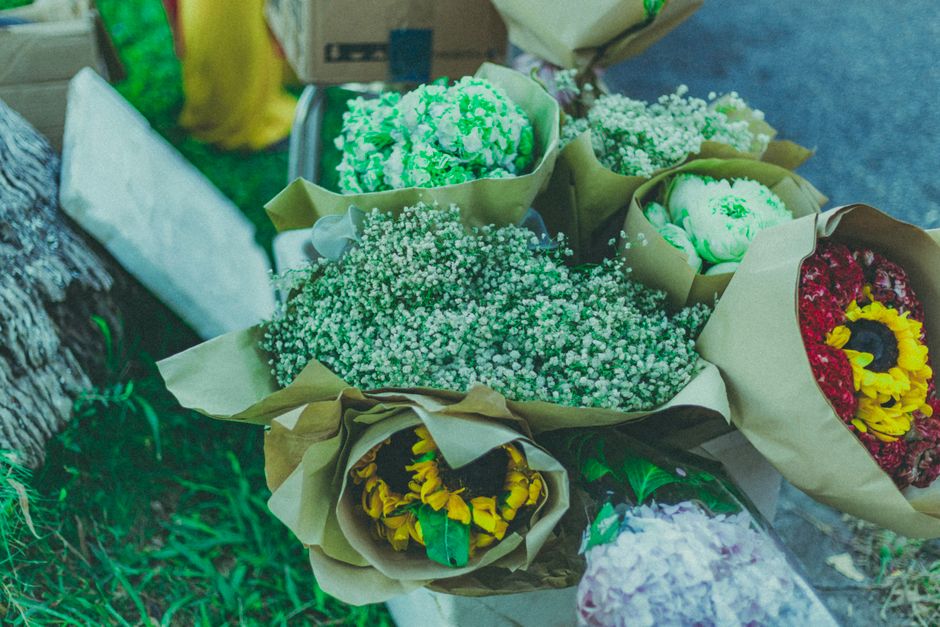
- Composting contaminated material. Glitter, plastic-coated wrap, foam, and metal wire can all cause issues.
- Forgetting about moisture. Too much wet material can make compost anaerobic and unpleasant.
- Assuming all paper is compostable. Some paper has coatings, inks, or lamination that make it unsuitable.
- Using flower foam as if it were organic. It is not. It belongs in general waste unless a specialist system says otherwise.
- Leaving flowers too long before sorting. Once they degrade, the whole task gets messier and more likely to be skipped.
A simple self-check helps: can I identify every material in this arrangement? If not, pause and sort it before disposal. That one habit stops a lot of mistakes.
And yes, sometimes a ribbon is so pretty you want to keep it for reasons that make no practical sense. Fine. Keep it. We are not here to fight with sentimentality.
Tools, Resources and Recommendations
You do not need specialist equipment, but a few basic tools make floral waste handling much cleaner and faster.
- Kitchen scissors or pruning snips: useful for cutting stems into shorter pieces.
- Small caddy or lined tub: helps separate organic waste from packaging.
- Paper bags or compostable liners: helpful for collecting clean organics before transfer.
- Reusable tray or box: ideal for cards, ribbons, gift tags, and keepable items.
- Labelled storage bins: particularly useful in shops, venues, and offices.
- Gloves: not essential, but handy when flowers are past their best and a little slimy. Let's face it, that happens.
If you buy flowers frequently, it also helps to keep a small "flower care and cleanup" station near the vase area. This can be as simple as scissors, a reusable cloth, a waste bowl, and a spare bag for packaging. When everything lives together, you are more likely to use it.
For readers who want to pair flower care with better longevity, the flower care guidance can help reduce unnecessary waste in the first place. A longer-lasting bouquet means fewer dead stems and less frequent disposal, which is the whole point, really.
If you are choosing arrangements with lower waste potential, simpler designs often make sorting easier later. Browsing options like florist choice or even practical seasonal picks can reduce packaging complexity. For regular gifting, the broader flower delivery West Hampstead NW6 page is also useful when you want a straightforward order with less fuss.
Law, Compliance, Standards, or Best Practice
For most households, floral recycling and composting is a practical waste-management issue rather than a legal one. The key is to follow local waste collection guidance, separate materials sensibly, and avoid putting non-compostable items into organic waste streams. If you are a business, especially one producing regular floral waste, it is wise to manage waste consistently and keep contamination low.
Best practice in the UK usually comes down to a few careful principles: do not guess what a waste stream accepts, keep recyclable materials clean and uncontaminated, and store waste in a way that avoids odours, spills, and pest issues. If you are handling wedding or event waste, it is worth planning disposal before the event starts, not afterwards when everyone is tired and the room is already being packed down.
Businesses should also think about their internal responsibilities. Staff need simple instructions, bins need to be clearly marked, and contractors should be briefed if waste collection is part of the job. In our experience, the smoother the bin setup, the less likely someone is to dump a rose stem into the wrong container because they were busy carrying three boxes and a tray of champagne flutes. Happens all the time.
If you are unsure about a material, treat it cautiously. Foams, coatings, wires, glitter, and mixed synthetic decorations are the common troublemakers. When in doubt, separate first and ask questions later. That approach is usually safer than hoping for the best.
Options, Methods, or Comparison Table
There are several ways to manage flower waste, and the right one depends on the type of material and how much you have. Here is a simple comparison to make the decision easier.
| Method | Best for | Pros | Watch-outs |
|---|---|---|---|
| Home composting | Clean stems, leaves, petals, plain paper | Low-cost, convenient, reduces bin waste | Not suitable for contaminated or synthetic materials |
| Council or green waste collection | Households with garden or organic waste services | Easy for larger volumes, off-site processing | Acceptance rules can vary; check before using |
| Packaging recycling | Clean cardboard, paper bags, some wraps | Useful for outer packaging and gift materials | Must be clean and free from food, soil, or plastic coating |
| Reuse | Vases, jars, ribbons, boxes, tags | Reduces waste immediately and saves money | Needs storage space and a bit of discipline |
| General waste | Foam, wire, contaminated mixed items, non-recyclables | Safe fallback when nothing else applies | Least sustainable option, use only when needed |
If you are a florist or event organiser, the most efficient system is usually a combination: reuse first, compost what you can, recycle the clean packaging, and send only the leftovers to general waste. That layered approach is simple, but it works.
Case Study or Real-World Example
A small West Hampstead office that receives weekly reception flowers is a good example. At first, the team treated old arrangements as ordinary rubbish. That meant a weekly mix of stems, packaging, sticky tape, and the occasional stray ribbon all going into one bin. The space looked cluttered, and the waste bags were often heavier than necessary.
They changed to a simple three-part routine. First, one staff member removed the vase and kept it for reuse. Second, the organic flower waste went into a separate container for composting or green waste. Third, clean paper packaging and cardboard sleeves were placed in recycling. Anything synthetic went to general waste only if it could not be reused or recycled cleanly.
The result was not glamorous, but it was effective. The bin area was tidier, the flower routine took less time, and people stopped asking where the ribbon should go. A small thing, but it made a difference. You notice that kind of improvement after a couple of weeks. The place just feels calmer.
A local customer ordering seasonal arrangements through best flower delivery in West Hampstead NW6 also found that choosing simpler arrangements made end-of-life sorting easier. Less packaging, fewer mixed materials, and a much cleaner wrap-up at the end. Sometimes the best sustainability fix starts at the point of purchase, not at the bin.
Practical Checklist
Use this quick checklist whenever you are dealing with a fresh bouquet, event flowers, or a shop's offcuts.
- Have I removed any keepsakes, cards, or reusable items?
- Have I separated stems, leaves, and petals from packaging?
- Is any material coated, glittered, wired, or foam-based?
- Do I know whether my compost or collection service accepts this material?
- Have I kept clean paper and cardboard separate from damp waste?
- Are vases, jars, and containers set aside for reuse?
- Have I removed tape, clips, and non-organic ties where possible?
- Is the waste likely to sit around long enough to cause odour or mould?
- Have I labelled the bins clearly for anyone else using them?
- Have I considered whether the arrangement could be chosen differently next time to reduce waste?
If you can tick most of those boxes, you are already doing better than the average setup. And no, it does not need to be perfect. It just needs to be consistent.
For customers who want to make better choices at the point of ordering, the sustainability page is a useful place to start. If you are sending flowers regularly, the send flowers West Hampstead NW6 option can also fit into a more deliberate, lower-waste routine when you choose carefully.
Conclusion
West Hampstead floral recycling and composting in 2026 is not about being perfect or turning flower disposal into a big project. It is about doing the simple things well: separate the organic material, keep contamination out of compost, reuse what still has value, and recycle clean packaging where possible. Once you get into the habit, the whole process takes very little time.
That matters because flowers are meant to bring ease and warmth, not a pile of awkward waste at the end of the week. A better system makes your home tidier, your workplace calmer, and your environmental footprint a little lighter. Not bad for a few minutes of sorting.
If you are ready to reduce waste, simplify disposal, or improve your flower routine, start with one arrangement and build from there. Small changes are often the ones that stick.
Get a free quote today and see how much you can save.
Frequently Asked Questions
Can I compost all flower waste from a bouquet?
Not always. Clean stems, leaves, and petals are often suitable, but plastic wrap, wire, foam, tape, glitter, and coated materials usually are not. Sort the bouquet first.
What flower packaging can usually be recycled?
Clean cardboard boxes, paper sleeves, and plain paper packaging are often recyclable. Anything plastic-coated, greasy, or contaminated with moisture may not be accepted.
Is florist foam compostable?
No, florist foam is generally not compostable. It should normally go into general waste unless a specialist waste route is available and clearly accepted.
What should I do with old vases and jars?
Keep them for reuse if they are in good condition. If you no longer need them, check whether local reuse or recycling options exist for glass containers.
How do I stop floral waste smelling in warm weather?
Remove wilted flowers promptly, keep waste contained, and avoid leaving damp stems in an open bin for too long. In summer, quick disposal matters more than people think.
Are dried flowers compostable?
Sometimes, yes, if they are clean and free from non-compostable decorations. If they contain sprayed finishes, glitter, or synthetic additions, treat them more cautiously.
Can I put rose thorns and stems into compost?
Usually yes, if the stems are clean and not mixed with wires, tape, or plastic. Cutting them into shorter lengths can help them break down faster.
What is the easiest way to manage flower waste at home?
Use a simple two-bin system: one for compostable organic material and one for packaging or mixed waste. Keep scissors nearby and sort straight after the flowers are finished.
Do wedding flowers need a different disposal approach?
Often yes, because weddings include more mixed materials like ribbons, corsages, wired stems, and decorative foam. A plan before the event makes cleanup much easier later.
How can a florist reduce floral waste more effectively?
Florists can pre-sort offcuts, keep packaging separate, choose reusable presentation items, and train staff on a simple waste workflow. Clean separation at source is the biggest win.
Should I rinse flower containers before reuse or recycling?
Yes, if possible. A quick rinse removes residue, reduces odour, and makes reuse or recycling more straightforward. It is one of those tiny jobs that pays back.
Where do I start if I want to be more sustainable with flowers?
Start by separating organic waste from packaging and choosing simpler arrangements when you can. If you buy flowers regularly, support suppliers and care routines that reduce waste from the outset.